Why a Clear Route Changes the Feel of a Room
A clear route through a room reveals why movement feels awkward and shows how to adjust furniture, doors, and everyday landing spots with care.
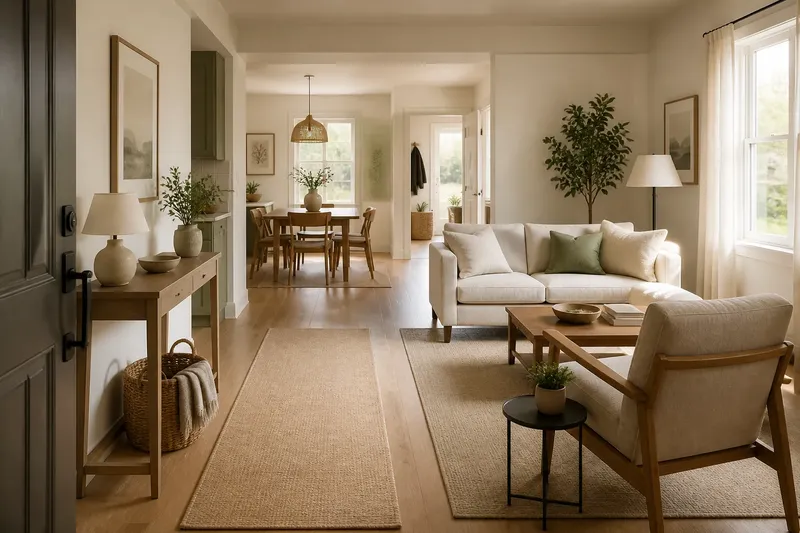
A clear route through a room can make the same furniture feel easier to live with, while a narrow or interrupted route can make the space seem unsettled. To understand why a room feels awkward, notice where people actually walk before moving anything: from the doorway to a seat, between the kitchen and dining table, or around a bed to reach a closet.
Those paths often expose a layout problem that a floor plan alone does not. A chair may look neatly placed but sit directly in the line between the entrance and the sofa. A basket may be convenient for one person yet become an obstacle when someone carries laundry past it. Work through the room in the order people use it, then adjust the particular point where movement breaks down.
Why does the route feel awkward at the entrance?
If someone steps inside and immediately turns sideways, stops short, or walks around a table, the entry route may be meeting furniture too soon. The cause is often not the entire arrangement but one object sitting in the first natural line of travel. A console, dining chair, plant stand, or open cabinet door can claim space that the entrance needs.
Try tracing the route from the threshold to the room’s main destination. Keep the path direct where possible, and look at the full area an object occupies during ordinary use. A dining chair needs room to be pulled out; a cabinet door needs room to open; a coat or bag may temporarily take up space near the door. Consider these active positions, not only the furniture’s resting position.
If the entry still feels crowded, move the smallest obstructing item first. A lightweight plant stand or occasional chair is easier to relocate than a large piece, and its effect is easy to assess. Avoid shifting several things at once: if the route improves or worsens, you want to know which change made the difference.
What causes a walking path to zigzag?
A route that bends around several objects can make a room feel disjointed even when every individual piece seems reasonable. This often happens when furniture is arranged around separate walls or focal points without considering the line connecting the entrance, seating, and other everyday destinations.
Look for the repeated detours. Does someone pass around the corner of a rug, squeeze between a side table and sofa, then cross behind a chair? The sequence matters. One small turn may be comfortable; several turns in quick succession can make a simple trip feel like an obstacle course.
Try moving one piece that creates the sharpest change in direction. Turning a chair slightly, shifting a side table nearer the sofa, or moving a floor lamp out of a passage may straighten the route without changing the room’s overall arrangement. Keep the walking line clear enough for the people who use it, including anyone carrying a tray, laundry basket, or groceries.
Say you enter a living room and walk around a narrow console before cutting between a coffee table and an armchair. Imagine moving the console closer to a wall and turning the armchair toward the sofa. The expected visible result is a more direct line from the doorway to the seating area, with fewer abrupt turns; if the chair then blocks access to a window or another seat, adjust its angle rather than treating the first placement as final.
Why does a passage vanish when furniture is in use?
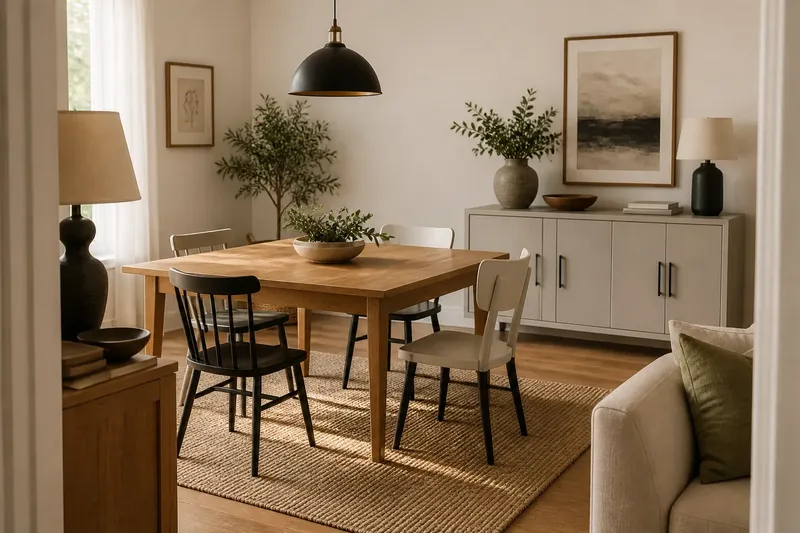
Some layouts look open while everything is tucked away, then become difficult as soon as people use the room. An extended dining chair, open drawer, reclined footrest, or closet door can occupy the path. This is a common reason a route seems clear during a quick glance but awkward through the day.
Observe the room during its normal routines. Pull out the chairs people actually use, open the doors and drawers, and notice where someone stands while reaching for an item. You do not need to measure the room to identify a conflict: look for a door that cannot open comfortably, a chair that blocks a passage, or a person who has to wait for someone else to move.
Then decide which use should have priority at that point. A dining chair may need to move closer to the table when the meal is over, or a storage item may belong somewhere that does not share the doorway’s swing. If the conflict involves a fixture or built-in element, do not attempt alterations to structural, electrical, gas, or other safety-critical work; consult a qualified professional when needed. For placement and clearances that depend on a product label, manufacturer instructions, or local rules, follow those requirements.
What if people keep cutting through the seating area?
A shortcut through the middle of a conversation area can make seating feel exposed and interrupt people who are trying to talk or relax. The route may be the most direct connection between two frequently used parts of the home, so asking everyone to walk around the room is unlikely to fit daily habits.
First identify the destinations at both ends of the shortcut. If the path connects the entrance to a hallway, kitchen, or balcony, treat it as a real circulation route rather than assuming the seating arrangement will stop it. A sofa positioned across that line may be creating the problem even if it anchors the room visually.
Try drawing the seating group inward or rotating one piece so the natural passage runs along its edge. A sofa does not always need to sit against a wall, but its position should not force a regular route through the gap between people and their coffee table. If the available layout offers no clean alternative, make the crossing predictable and keep small, easily knocked objects out of it.
How can you tell whether a route is too tight?
A route can feel cramped without being completely blocked. Notice the gestures people make: turning shoulders, sidestepping a corner, lifting a bag over a low object, or moving a chair before they can pass. Repeatedly moving the same item is a useful clue that its resting place is too close to a path.
Pay attention to who uses the room and what they carry. A route that works for one person walking empty-handed may feel awkward for someone carrying a child, a laundry basket, or a serving dish. Consider the household’s ordinary movement rather than an imagined, perfectly tidy version of the room.
When in doubt, test a small change with movable furniture before committing. Shift an end table, tuck in a chair, or temporarily remove an ottoman. Watch whether people can pass without pausing and whether the route still leads naturally to the intended destination. If the adjustment simply transfers the bottleneck to a different doorway, undo it and try another piece.
Which route problems should you check first?
Where should I start tracing a room’s route?
Start at the entrance people use most, then follow the usual trips to seating, storage, windows, or adjoining rooms. Trace one destination at a time so that a secondary shortcut does not distract from the main obstruction.
Should every path run in a straight line?
No. A gentle turn can feel natural if it avoids furniture and leads clearly to a destination. The concern is a series of detours or a sharp squeeze that people have to repeat during ordinary use.
What should I move first to improve circulation?
Begin with a light, movable object that visibly interrupts the route, such as a side chair, plant stand, or small table. Recheck the path after that one change before shifting larger furniture.
How do I judge a route when the room is empty?
Imagine or briefly arrange the room in its usual working state: chairs pulled out, doors open, and people reaching for everyday items. A route that exists only when every object is tucked away may not suit the room’s normal routines.
How do you know the new arrangement works?
Use the room in its ordinary sequence rather than judging the layout from the doorway alone. Walk in, sit down, get up, reach storage, and pass through while another person uses the space if that reflects the household’s routine. Notice whether anyone pauses, asks for an object to be moved, or repeatedly takes a different route from the one the layout seems to invite.
Also check that improving one path has not made another task less comfortable. A clearer route past the sofa is not much help if it blocks a drawer or leaves a chair awkward to use. Treat each adjustment as a small trial in placement, and keep the changes that make movement feel natural without disrupting the room’s other functions.
A clear route is not an empty strip that must remain untouched. It is a path that accommodates the way people actually enter, pass, pause, and carry things through a room. Watch where those movements meet furniture, correct the most obvious obstruction, and let the next ordinary trip show whether the arrangement feels easier.