A Winter Reading Corner, Shaped Around the Chair
Plan a winter reading corner around the chair, with nearby surfaces, layered light and breathing room arranged to make reading feel inviting.
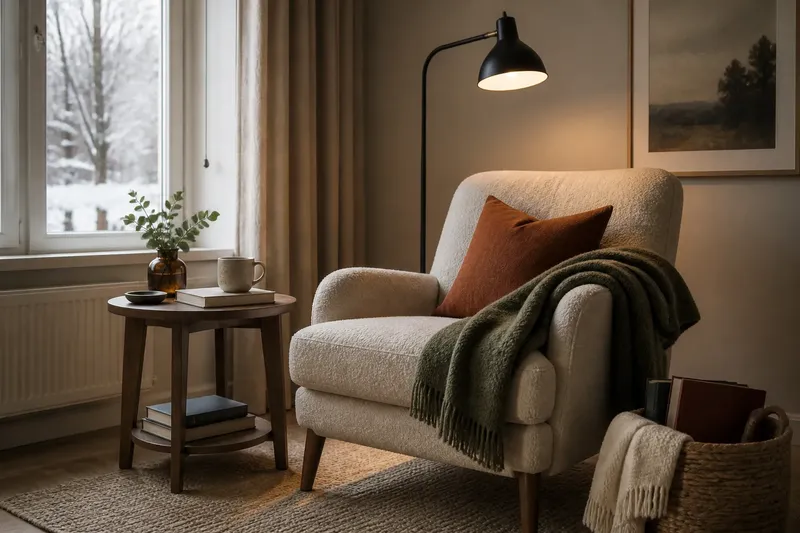
A winter reading corner works best when the chair feels settled, not stranded beside a lamp. Start with the seat you actually want to use, then arrange nearby surfaces and surrounding space to support the small habits of reading: setting down a mug, reaching for a book and shifting comfortably as the light changes.
Rather than filling an empty corner with a chair and accessories, treat the chair as the anchor. These seven decisions help it feel inviting through the colder season without making the rest of the room feel crowded.
1. Choose the chair for the way you read
Begin with the chair’s shape, arms and seat depth. A compact upholstered chair can suit a short reading break, while a deeper lounge chair may invite longer sessions but needs more room around it. If you read with a book held low, arms can provide a resting place; if you prefer to curl up, a rigid, narrow seat may feel restrictive.
Check the chair in its intended position before adding anything else. Sit down, open a book and notice whether your elbows have space and your feet rest comfortably. If the chair reclines or swivels, leave its movement unobstructed. A footstool is useful only if it fits the way you sit and does not force you to twist around a table or block a nearby door.
Think about the chair’s visual weight as well as its footprint. A bulky, dark chair can dominate a small corner, while a lighter frame or visible legs may leave more of the floor in view. This is not a rule to choose the smallest seat; it is a prompt to notice how much attention the chair claims.
2. Place the chair where winter light helps
Look at the corner at the time you are most likely to read. A spot near a window may feel bright during the day, but a winter afternoon can bring glare, cold glass or a draft. Try the chair at different angles before settling on its position. Turning it slightly toward the room can feel more welcoming than pointing it straight at a wall, while angling it toward a window can make daylight easier to use.
Keep curtains and window coverings easy to reach. If the chair sits close to a radiator or heating vent, avoid trapping fabric against it or blocking the airflow. Follow the appliance maker’s directions and local safety guidance for required clearances. A chair that feels cozy at first may become uncomfortable if heat, drafts or direct sunlight make the seat unpleasant.
Imagine you have a low-backed chair beside a north-facing window and read after work. You angle the seat toward the room, add a floor lamp behind its shoulder and keep the curtain pull accessible. The expected visible result is a chair that receives useful light without making the window or its controls awkward to use.
3. Give the chair a surface within easy reach
A small table can make the corner feel ready for use, but its position matters more than its decorative style. Place it on the side where your hand naturally reaches when seated. The top should hold the items you need without requiring you to lean far forward or twist. A compact side table, a narrow C-shaped table or a stable stool may work, depending on the chair’s arms and the available floor space.
Test the arrangement with an actual book, a reading light if it sits on the table, and the cup or glasses you usually bring. A tabletop crowded with ornaments leaves no practical landing place. Keep the surface simple: one or two useful objects can make it feel considered, while an empty patch gives the corner room to function.
For a chair with a high arm, a low table may disappear from reach; for a low chair, a tall top can feel intrusive. Check the relationship while seated rather than judging it from across the room. If you need to move the table every time you stand up, shift it or choose a more compact form.
4. Shape the light around the page
Reading comfort depends on light falling on the page without shining directly into your eyes. A floor lamp with an adjustable shade can place light over a shoulder, while a table lamp may suit a chair with a stable surface beside it. Look for a bulb and fixture that the manufacturer identifies as compatible, and follow the fixture’s instructions rather than improvising with electrical components.
Use more than one source if the room’s general lighting leaves the corner dim. A lamp for the page and softer ambient light elsewhere can keep the chair from feeling like a bright island in a dark room. If the lamp’s cord crosses a walking path or catches on the chair, reconsider the lamp’s location or choose a suitable cordless fixture; do not route a cord where it can be tripped over.
Notice what the light does to nearby materials. A woven shade, a matte wall and a soft throw can make the corner feel gentle, while a polished tabletop may reflect a bright spot toward the reader. A small adjustment to the lamp angle can change the effect without adding more objects.
5. Add texture where the chair invites contact
Winter comfort often comes from touch rather than a themed display. A wool throw over one arm, a textured cushion or a small rug under the chair can make the seat feel distinct from the rest of the room. Choose one or two materials that work with the chair’s upholstery instead of layering every soft item you own.
Consider what each addition does. A throw should be easy to pull over your lap and easy to fold away; a cushion should support the way you sit rather than push you forward. A rug can visually gather chair and table, but its edges should sit flat and should not interfere with the chair’s legs or movement. If the seat is already plush, a smoother fabric or a firmer cushion may provide more useful contrast than another thick layer.
Keep seasonal colour in supporting pieces you can change later. A rust-coloured cushion, deep green throw or muted blue cover can add a winter note without requiring a permanent change to the room. Let the chair remain the visual center instead of making the textiles compete with it.
6. Keep useful objects close, but not scattered
Reading corners attract small belongings: bookmarks, glasses, a notebook and books waiting their turn. Give those items a deliberate home. A shallow tray on the side table can corral a few essentials; a basket beside the chair can hold a throw or current books. Keep the basket outside the chair’s movement and clear of the route through the room.
Choose storage according to what you reach for, not what looks like a complete reading set. If you regularly switch books, a small stack on the table may be enough. If you prefer to keep several nearby, a low shelf can serve the corner without making the chair feel enclosed. Avoid placing a tall stack where it could tip into the seat or block light.
Leave some objects out of the corner. A reading chair does not need a display of every book, candle and decorative accessory associated with winter. A few visible, useful things make the invitation legible; open space lets the chair breathe.
7. What should you check before the corner is settled?
Can you get in and out without shifting furniture?
Sit down and stand up as you normally would, then check the chair’s path around the table and footstool. If you need to move an object each time, reposition it or remove it.
Can you reach the book and drink comfortably?
Take your usual seat and reach for both without twisting or leaning sharply. Move the side table to the more natural side if the motion feels awkward.
Does the light work after daylight fades?
Check the chair in the evening, with the room’s usual lights on. Adjust the lamp so the page is visible while the light source itself stays out of your direct line of sight.
Does the corner still belong to the room?
Look at the chair from the doorway and from the nearby seating area. If it seems cut off, turn it toward the room or reduce the number of objects gathered around it.
Let the chair set the final boundary
Once the chair, light and reachable surface are in place, pause before adding another accessory. A winter reading corner feels inviting when the seat has enough room to be used, the necessary objects are close, and the surrounding room remains open to everyday life. Keep that balance in view as you refine the arrangement, and let the chair—not a pile of seasonal decorations—tell you when the corner is ready.