The Matching-Furniture Myth: Why a Room Need Not Come as a Set
Matching furniture need not come as a set. Use shared proportions, wood undertones, or small finish details to connect individual pieces without losing their character.
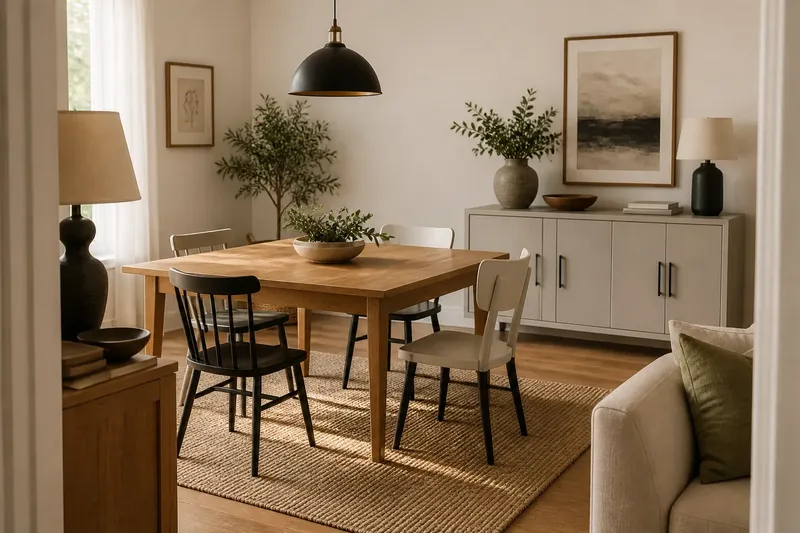
Matching furniture can make a room feel coherent, but it does not have to come as a set. A dining table and chairs, or a bed and bedside tables, can differ in age and style while sharing a visible link: similar proportions, a related finish, or a repeated material.
Think of coordination as a relationship between pieces, not a purchase category. Start with what you want to keep, then identify one quality that can connect it to the rest of the room.
What makes different furniture feel related?
Choose one feature that can carry from item to item. It might be a warm wood undertone, a dark metal detail, a rounded profile, or similar visual weight. The connection does not need to be exact; it needs to be clear enough to notice.
Look at the furniture from the doorway and from the room’s main seat. If one item seems much heavier or more ornate than everything around it, repeat a small part of its design elsewhere. A dark lamp base, for example, can link a substantial cabinet to a lighter table with dark legs.
Matching repeats the same object or finish; coordination repeats a quality. That distinction leaves room for a vintage chair, a contemporary table, and a cabinet with its own character.
Can shared proportions connect mismatched furniture?
Compare the height, width, and visual mass of nearby pieces. A narrow table beside a broad sofa may feel disconnected even if both are made from the same wood. Conversely, different finishes can work together when the pieces have compatible scale and outlines.
In a dining area, compare the table’s visual weight with the chairs. Slender chairs can suit a substantial table if their backs have enough presence. A bulky chair beside a delicate table may make the table seem undersized; an open chair shape or sturdier table base can restore balance.
Small details can echo proportion, too. A low cabinet with long horizontal pulls may relate to a sofa with a low, broad profile. The resemblance gives the eye a link without making the pieces twins.
Which finishes can repeat without matching exactly?
Wood does not need to match board for board. Compare its undertone and surface character instead. A honey-toned oak table and a deeper walnut cabinet may work together if both read warm. Pale, ashy wood may sit more comfortably beside another subdued finish than beside a strongly red-toned surface.
Metal offers another simple link. Repeat a finish such as blackened steel, aged brass, or brushed nickel in a lamp base, cabinet pull, or chair frame. If the room already has several strong materials, keep the repeated metal secondary.
Texture can bridge different colors. A smooth painted sideboard and a woven-seat chair may connect through a shared muted tone or rounded shape. Let one material create contrast and another provide the link; matching every surface can make the room feel flat.
How do you choose a linking detail?
Begin with something you want to keep. A rug, framed print, or favorite chair may suggest the room’s connecting thread. Look for furniture that repeats just one part of that cue rather than copying the whole look.
Imagine you have a rectangular oak dining table, two painted chairs with dark legs, and a plain sideboard with silver pulls. First, decide to keep the table and chairs. Next, compare the sideboard with them from the doorway and notice that its pulls are the only cool metal in the group. Then replace those pulls with dark ones that echo the chair legs. The expected result is a visible link between the furniture, while the table, chairs, and sideboard remain distinct; the tradeoff is losing the silver detail if it connects to other hardware nearby.
Before buying furniture, place a finish sample or clear phone photo beside the existing pieces in daylight and in the room’s evening light. A stain that looks close under bright store lighting may appear redder at home. Check the actual surface when the finish is central to your choice.
What should you check before changing the furniture?
Use these observations to decide whether a small adjustment is enough or a different piece deserves consideration:
- View from the entrance: If one piece dominates unexpectedly, then reduce nearby visual weight or repeat one of its details; otherwise, keep the current balance.
- Compare silhouettes: If every outline is ornate, then try a simpler form; if all the pieces are boxy, then introduce a curved detail; otherwise, leave the shapes as they are.
- Compare wood undertones: If a strong warm-red finish sits abruptly beside cooler wood, then add a textile or painted surface as a transition; if the undertones already relate, do not add another material just to force a match.
- Track metal finishes: If several metals compete for attention, then repeat one finish and let the others remain incidental; if the different metals read quietly, keep them.
- Check the room in use: If chairs collide with a table or doors cannot open comfortably, then change the placement or choose a better-fitting piece; if everyday movement works, do not rearrange solely for a photograph.
- Look at the room’s focal point: If several pieces compete to lead, then let one stand out and quiet the others with simpler forms or finishes; if one piece already anchors the room, preserve that hierarchy.
These are adjustments, not rules for a perfect set. A cushion, tray, or lamp may provide the needed visual link without replacing furniture.
What questions do people ask about matching furniture?
Do all wood tones need to match?
No. Related undertones, a repeated shape, or a connecting textile can help different woods sit together. Check the finishes in the room’s light before deciding that two pieces clash.
Can modern and traditional furniture share a room?
Yes, if scale or materials provide a point of contact. Pair a traditional cabinet with a clean-lined table, for instance, and repeat one finish or color in a smaller detail.
How many finishes can a room handle?
There is no fixed count that suits every room. If surfaces feel busy, keep the finishes that support the main furniture and make the others less prominent with textiles or accessories.
Should you replace matching dining chairs?
Not necessarily. Keep them if they work for the table and room; one contrasting chair may be enough to loosen a formal set. If you change the group, compare seat height and visual weight before focusing on finish alone.
How can you make matching furniture feel coherent?
Pick one recurring quality and use it with restraint. Shared proportion can connect different finishes; a repeated wood undertone can link different silhouettes; a common metal detail can tie together objects from different eras.
When assessing matching furniture for your room, judge the relationships rather than the labels on the pieces. Keep what serves the space, add a clear visual link, and let the differences remain visible. Before changing anything, also check that the furniture still supports how you move through and use the room.